When the tech on the roof has less information than the office
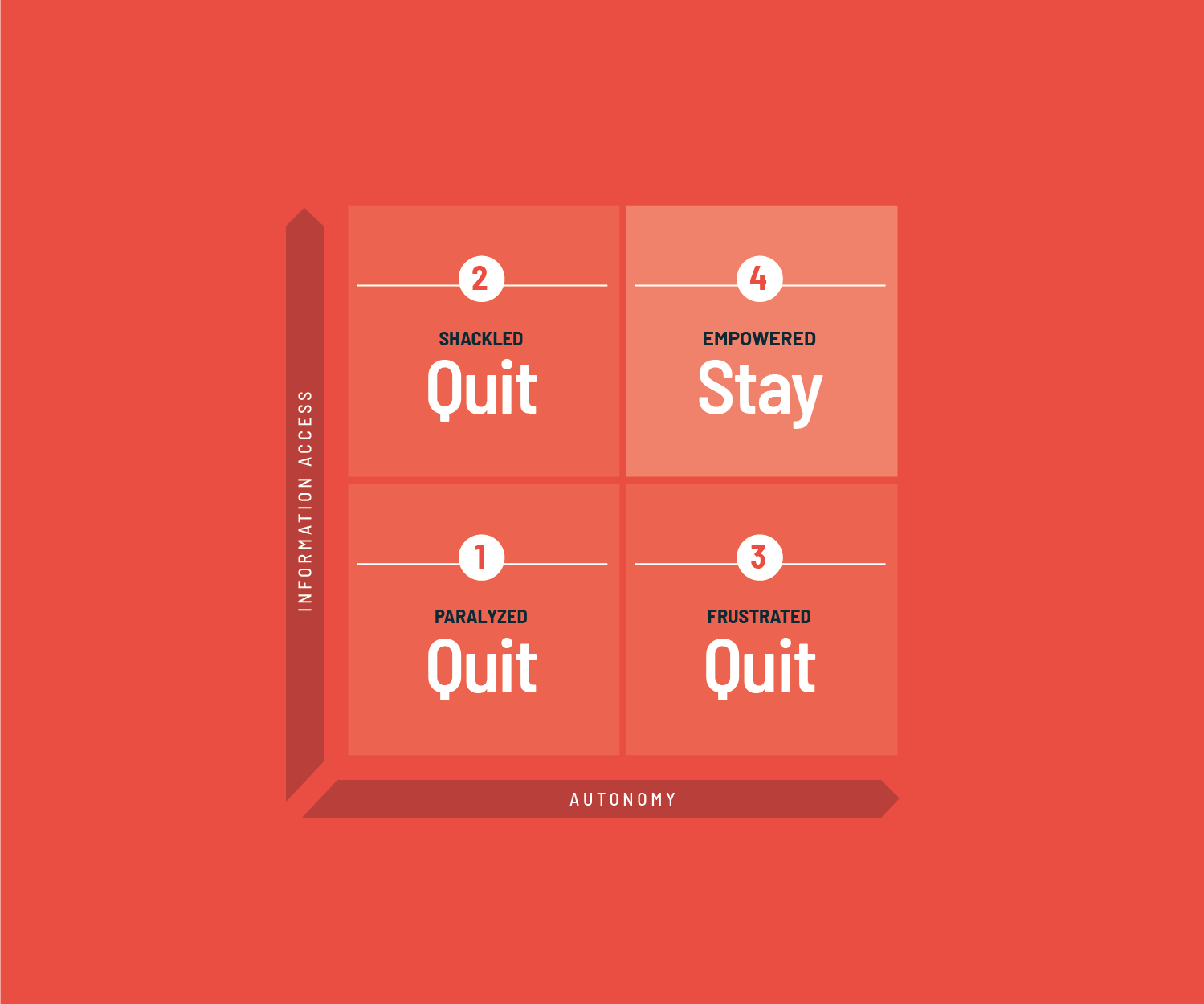
Responsibility and information symmetry
Ask two questions about your workflow. How much responsibility do you expect the field to carry? How much information does the field actually have when it needs to make a decision?
Those two variables explain a lot about why commercial HVAC service companies either move quickly or get stuck in handoffs.
1. Low responsibility, low information
In this model, the field is mostly there to observe, report, and wait.
The technician finds the issue. The office interprets it. Someone else prices it. Someone else sends it. The customer waits.
This may feel controlled, but it slows the entire business down.
2. Low responsibility, high information
Here, the field can see what is going on but still cannot move the work forward.
The technician knows the customer. Knows the equipment. Knows what needs to happen next. But the workflow still requires an office relay for every step that matters.
That creates queues, not control.
3. High responsibility, low information
This is one of the worst combinations.
The field is expected to make decisions without the data required to make them well. No clear equipment history. No pricing logic. No view of open work. No customer-specific requirements.
So the technician either guesses, calls the office, or delays. That is not empowerment. It is bad system design.
4. High responsibility, high information
This is where commercial HVAC service starts to move properly.
The technician has the same operational context the office has, equipment history, job context, pricing structure, prior work, open follow-up, and site requirements. The work can move forward while the visit is still live.
That does not remove the office. It removes the office as a translation layer.
The point
This is not a culture article. It is an operating design article.
If you want the field to help capture revenue, reduce handoffs, and move repair work forward on site, the field has to have the information to do it well. When the tech on the roof can see what the office sees, the same-visit quoting model stops being a slogan and starts being a real workflow.